
Salesforce just released their Tenth Edition State of Marketing report – and buried inside it is a stat that should make any marketing manager uncomfortable.
75% of marketers have adopted AI. Yet 84% confess they’re still running generic campaigns. (Salesforce State of Marketing, 10th Edition)
If your team is using Salesforce Marketing Cloud and you’re not seeing the results you expected, you’re not alone. The problem isn’t the platform. And it’s not your team’s effort. It’s something more structural – and it’s fixable.
The Gap Nobody Talks About
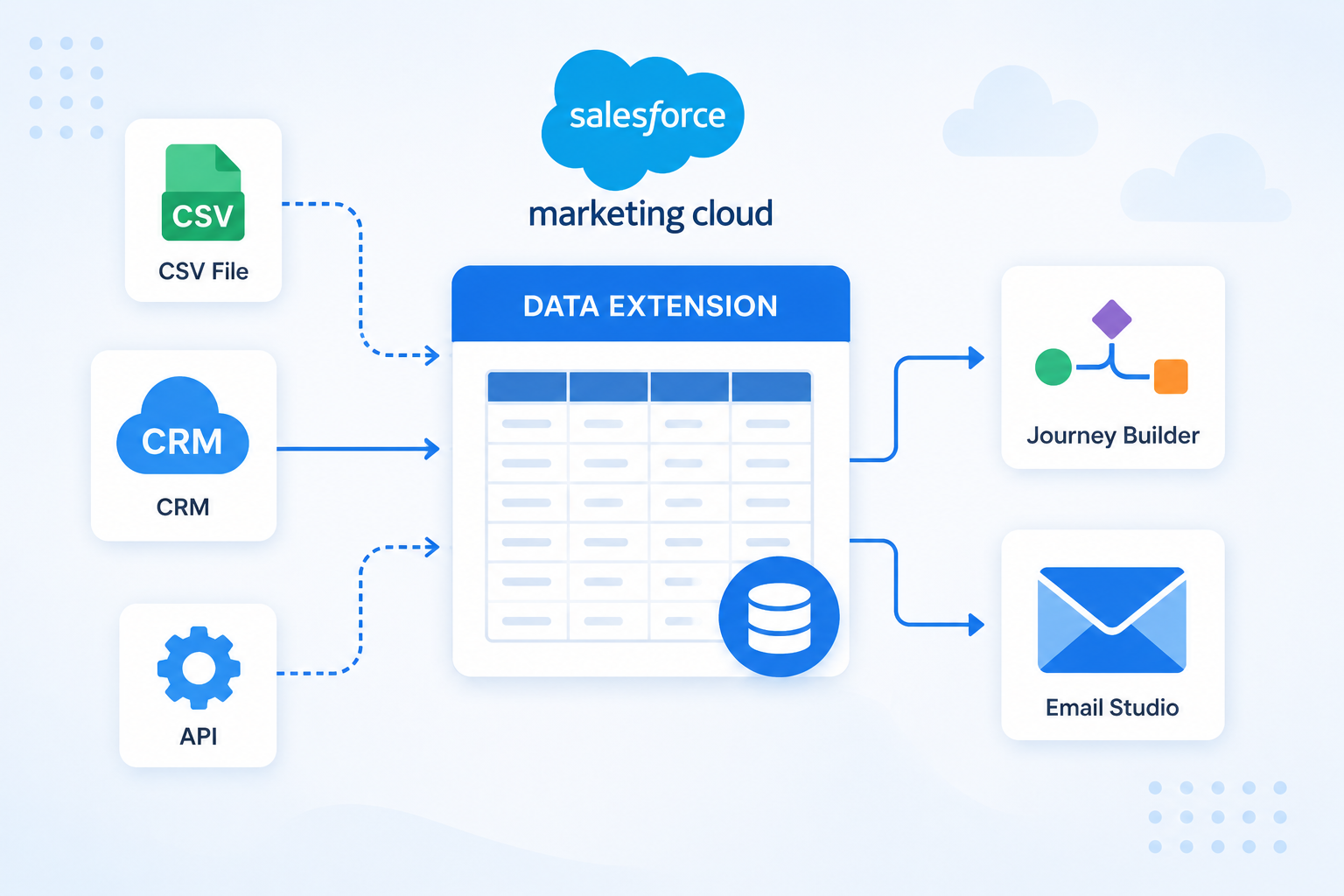
Most organizations implement SFMC, configure the basics, and then assume the platform will do the heavy lifting. And to be fair, the tools are genuinely powerful. Journey Builder, Einstein AI, Data Extensions, Automation Studio – the capability is there.
But capability and execution are two different things.
What typically happens is this: the initial setup gets done, campaigns go live, and then the focus shifts entirely to running campaigns rather than improving how they run. The configuration decisions made on day one stay in place for months – sometimes years.
Meanwhile, the platform keeps evolving. Your customer data keeps growing. And the gap between what SFMC can do and what it’s actually doing keeps widening.
Four Signs Your SFMC Setup Has Room to Grow
These are the patterns that come up most often when we work with marketing teams whose results have plateaued.
1. Open rates are flat — despite using Einstein Send Time Optimisation
Einstein STO requires 90 days of engagement data per contact to work properly. Contacts without it fall back to a generalized default send time – the same for everyone.
If a large portion of your list is inactive or engagement tracking isn’t fully configured, STO is working with incomplete information.
The fix is usually simpler than teams expect – it starts with a data audit.
2. Journeys send the same message regardless of behaviour
A contact who opens every email but never clicks is telling you something. So is one who clicked once six months ago and hasn’t engaged since. Journeys that don’t branch on real behaviour miss those signals entirely.
Personalised emails generate up to 6× more transactions than non-personalized equivalents. (Campaign Monitor, 2024)
The opportunity is in the branching logic – not in sending more.
3. Segments exist, but they’re static
Manually-updated lists reflect who your contacts were at the time of the last refresh – not who they are now. That gap grows with every campaign.
Segmented campaigns generate 30% more opens and 50% more click-throughs than non-segmented ones. (Mailchimp)
Dynamic segments that update automatically based on behaviour close that gap continuously.
4. Reporting shows what happened – not what to do next
Open rates and click rates are a starting point. The more useful questions – which segments are converting, where contacts drop out of journeys, which messages drive revenue – require a measurement layer that connects campaign activity to business outcomes.
Properly measured AI personalization programmes have shown revenue uplifts of around 40% and click-through rates 4× the industry average. (Verified Email / B2B Benchmarks 2026)
That kind of visibility makes the next decision easier.
The Real Reason This Happens
It’s not a technology problem. SFMC has the tools to solve all of the above.
The real issue is that running campaigns and optimising the platform are two different jobs – and most teams are only staffed for one of them.
Campaign managers are focused on delivery: the right content, the right approvals, the right send date. That’s a full-time responsibility. The work of auditing data quality, refining journey logic, improving segmentation, and maintaining the structural integrity of the platform tends to fall into the gaps.
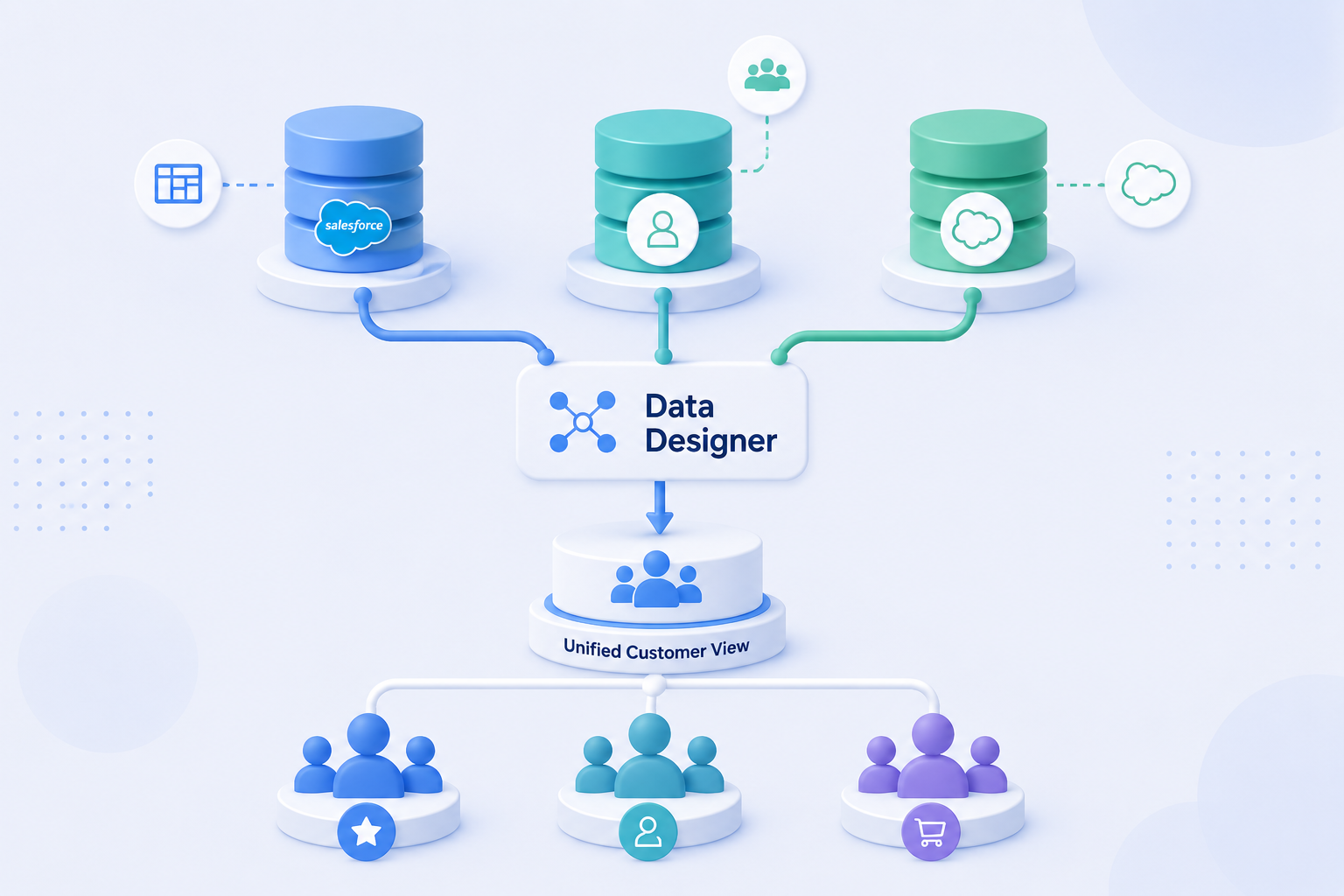
Add to this the reality that SFMC is a complex platform. Properly configuring Einstein AI, building dynamic segmentation, connecting data from external systems, and maintaining data hygiene across thousands (or millions) of contacts requires a specific kind of expertise that’s different from campaign execution.
Most teams don’t have both. And the platform quietly underperforms as a result.
What Good Actually Looks Like
When SFMC is set up and maintained properly, the platform does things that feel almost unfair to competitors who aren’t there yet.
Journeys that respond to what a customer just did – not what they did three months ago. Segments that shrink and grow based on real behaviour, not manual updates. Send time and content recommendations that actually reflect individual patterns. Reporting that connects campaign activity to business outcomes, not just email metrics.
This isn’t a future state. These are capabilities that exist in SFMC today. They just require the right setup and someone to keep them running well.
What Marketing Managers Can Do Right Now
You don’t need to rebuild everything. These are the four areas worth looking at first.
1. Check how much of your list Einstein is actually evaluating The Einstein STO dashboard shows you exactly how many contacts are being evaluated versus falling back to the default model. That number alone tells you a lot about whether your AI features are working as intended.
2. Review your journey decision splits Open your top three active journeys and look at where the branching happens. Are splits based on what contacts are actually doing – opens, clicks, page visits – or on static attributes set at entry? The answer usually points to where the biggest gains are.
3. Look at when your segments were last updated If your key segments are refreshed manually, check how often that’s actually happening in practice. The gap between refresh cycles is the gap between who your segments think your contacts are and who they actually are today.
4. Connect one campaign metric to a revenue outcome Pick one active journey and try to answer: how much revenue did this generate last month? If that question is hard to answer, the measurement layer is where to focus next.
These four questions won’t fix everything – but they’ll tell you where to focus.
Conclusion
Salesforce Marketing Cloud is a powerful platform. The AI features are genuinely useful – when the foundation beneath them is solid.
Most teams aren’t getting the results they should because the platform is being maintained at a lower level than it’s capable of operating. That’s a solvable problem, but it requires dedicated attention to the platform itself, not just the campaigns running on top of it.
If you’re looking at your SFMC results and wondering why the gap between what you expected and what you’re seeing keeps growing, that’s usually where the answer is.
Cirro Consulting specializes in SFMC managed operations – helping marketing teams get more out of the platform they’re already paying for. If you’d like a conversation about where the gaps might be in your setup, get in touch.